

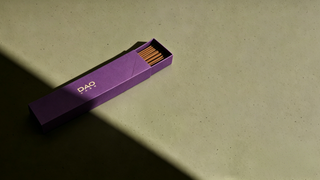
Lighting an incense stick and watching the smoke rise is a way for many people to relax. But have you ever wondered how long a stick of incense can burn? Sometimes it feels like I haven't enjoyed it enough, and then it's all burned up. Sometimes it feels like it burns very slowly. Actually, the burning time of incense sticks is not fixed. It is influenced by several different factors. This article will explain these factors one by one.
1. How Long Does An Incense Stick Typically Burn?
Under normal indoor conditions, a standard incense stick burns for approximately 20 to 40 minutes. For example, a standard length of incense stick, about 21 centimeters long and 1.5-2 millimeters thick, takes about 40 minutes to burn completely. Shorter sticks, ranging from 10 to 15 centimeters, have a burn time of around 20 to 30 minutes.
If you are using coil incense, the duration is significantly longer; it is quite common for a single coil to burn for several hours. Cone incense burns faster because it lacks a bamboo core for support. It usually doesn't take more than 20 minutes. Therefore, to know how long a stick of incense can burn, you first need to look at its size, thickness, and type.

2. Factors Affecting Burn Time
1. Length and Thickness
These two factors have the most direct impact. The longer and thicker the incense stick, the longer it will burn. Like candles. The thicker ones burn longer than the thinner ones.
Specifically, a 21-centimeter incense stick burns for about ten to fifteen minutes longer than a 15-centimeter one. Incense sticks that are 2 mm or thicker burn slower than those that are 1.5 mm thick. If you want the incense sticks to burn longer, choose longer or thicker ones.
2. The Fineness of the Incense Powder
The finer the incense powder is ground, the higher the density of the stick incense. Consequently, it burns more slowly. The principle is much like burning wood. Dense hardwoods burn more slowly than loose softwoods. Therefore, high-quality stick incense typically burns more slowly and more evenly. This is not solely due to the superior quality of the raw materials but is also closely related to the grinding process.
3. Humidity
You may notice that the very same box of incense sticks burns for a different duration on a rainy day compared to a sunny one. This is the effect of humidity at work.
Once you remove the incense sticks from their packaging, they will acclimate to the humidity of the surrounding air within 40 minutes. They will also absorb water vapor from the atmosphere. As the incense sticks absorb moisture, they burn more slowly. Therefore, the fact that incense burns more slowly on rainy days is not just your imagination.

4. Airflow
The influence of wind is far greater than you might imagine. A windy environment constantly replenishes the oxygen supply, causing incense sticks to burn more rapidly. Consequently, the burn time is significantly reduced.
This explains why incense often fails to stay lit outdoors or why it burns down particularly fast when placed near a fan. If you need to keep a window open for ventilation but still wish for your incense to burn for a longer duration, simply place the stick in a spot that is sheltered from the wind.
5. Raw Materials and Manufacturing Process
The raw materials used in incense sticks directly influence their burning characteristics. Woods with high oil content, such as agarwood and sandalwood, burn more slowly than ordinary wood powder. This is because the oils themselves require more time to combust.
Furthermore, the density of the incense stick and the proportion of binding agents used also affect the burning duration. Higher density and a greater proportion of binding agents result in a slower burning rate. Conversely, a higher essential oil content leads to a faster burning rate.
6. With or Without a Bamboo Core
Incense sticks available on the market generally fall into two categories: those with a bamboo core and those without.
In incense sticks with a bamboo core, the incense powder is applied solely to the surface of the core. Consequently, the bamboo core burns alongside the incense powder during combustion. However, the bamboo core burns at a faster rate than the incense powder. Therefore, the overall burning duration is primarily determined by the thickness of the incense powder layer.
Incense sticks without a bamboo core are formed entirely from compressed incense powder. As a result, they burn more evenly and slowly, while also producing less smoke.
7. Placement Angle
The angle at which an incense stick is positioned, whether placed vertically or at an incline, also influences its burn rate. Studies indicate that when an incense stick is placed at an angle, its burning speed undergoes a change. This occurs because the placement angle simultaneously affects both the supply of oxygen and the conduction of heat.
When an incense stick burns vertically, the flame clings closely to the body of the stick; the surrounding airflow is slow, and the replenishment of oxygen is relatively gentle. In this configuration, heat travels vertically upward, heating only a small section at the tip of the stick.

Conversely, if the incense stick is placed at an incline, the surface area of the flame exposed to the surroundings increases. Air can then circulate more easily around the burning point. With a more abundant supply of oxygen, the combustion naturally proceeds faster and burns more vigorously.
3. Ways to Make Incense Sticks Burn More Slowly
The most straightforward method is to choose thicker, longer incense sticks. Incense sticks burn more slowly when the humidity is moderate; however, do not let them get too damp, or they will not light. Burn them in a place sheltered from drafts. Keep the incense stick as vertical as possible; avoid letting it burn at an angle. Choose incense sticks without a bamboo core; they typically burn more slowly and evenly.
Conclusion
There is no single, fixed answer to how long a stick of incense will burn; it is influenced by a variety of factors, including length, thickness, and raw materials. Once you understand these variables, you can select the perfect incense to suit your specific needs. Of course, more importantly, you slowed down during the time it takes for an incense stick to burn.
If you are looking for an incense suitable for meditation, daily relaxation, or gift giving, we invite you to explore Dao incense. We insist on using natural herbs and wood and slowly handcrafting our products. Our goal is to make fragrance the quietest companion in your daily life. Click to visit Dao Labs and choose a scent that speaks to you.